ClientEarth Communications
1st April 2026


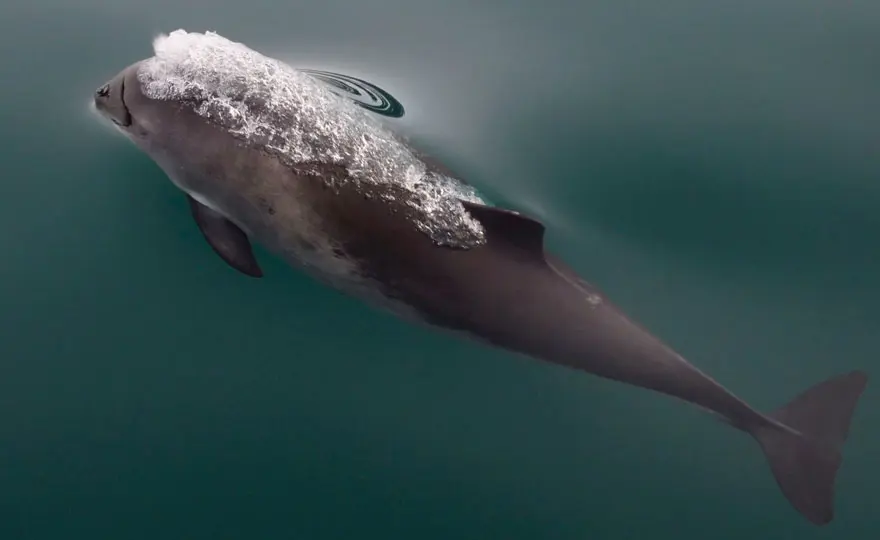
Picture this: dolphins, seabirds and other protected species trapped into the same nets that catch the hake and tuna we eat every day in Europe. Entangled and unable to free themselves, they get badly injured or choke and then get discarded back into the ocean.
This is called "bycatch" - it happens when animals are accidentally caught in fishing gear intended for other species. In Europe, it is killing non-target and endangered species on a scale that scientists say cannot be ignored. It is a hidden but preventable tragedy; the problem is that those rules are not being applied strongly enough by EU governments, who still have major gaps in monitoring and enforcement of existing laws.

When cetaceans and seabirds are trapped in fishing nets, many die from asphyxiation or suffer significant injuries that can lead to death. The trauma of entanglement can also affect the animals’ behaviour and reproduction, which in turn has long-term effects on the survival of their populations.
In the case of cetaceans, this disturbance is not limited to the individuals affected; it can have a knock-on effect for the transmission of ecologically important knowledge within a population. Cetaceans have complex social lives and different individuals within a population play specific roles, which can include sharing important information such as the location of food or safe places for rearing young. In the case of dolphins, their sexual maturity is quite late - around 8 years old. This increases the decline in case of mortality caused by bycatch. A recent groundbreaking study presents the first evidence of declining of the common dolphin population in the Bay of Biscay, the most abundant cetacean of the Northeast Atlantic Ocean. Conservation measures must be adopted, and reducing bycatch is one of them.
Bycatch is widely recognised as one of the biggest threats to seabirds in Europe. Almost 200,000 seabirds die annually in European waters, with data gaps suggesting the true figure could be higher.
France records some of the highest figures in Europe: every year, tens of thousands of seabirds are killed off French coasts after becoming hooked or entangled in fishing gear – caught as bycatch during fisheries targeting species such as hake, sea bass and tuna. This impacts species such as the Balearic shearwater (Puffinus mauretanicus), the Northern gannet (Morus bassanus) and the common guillemot (Uria aalge) which are now classified as critically endangered, near threatened and endangered according to the IUCN Red List.
For seabirds, bycatch can be especially damaging because many species reproduce slowly. In the case of the guillemot, low chick numbers mean population losses are harder to recover from.
Bottom trawls are unselective in what species they fish. That means that they unintentionally capture a lot of non-target species, which can make up to 60% of the total catches. Unwanted fish and endangered animals such as dolphins, sea turtles, and sharks, get stuck in the nets, get badly injured or killed, and are then thrown back to the sea.
Static fishing gears, such as longlines and gillnets, are relatively unselective and are responsible for high levels of bycatch, including cetaceans and seabirds. Although these gears are generally not the primary cause of fish stock depletion, their static nature makes them prone to incidental capture of non-target species. A wide range of mitigation measures exist to reduce the risk of bycatch associated with these static fishing methods.
In July 2022, the EU Commission opened an infringement procedure against France, Bulgaria and Spain against bycatches of protected species by fishing vessels. However, there is a well-documented lack of progress in developing bycatch reduction plans at EU level.
There are ways to minimise the risk of bycatch:
Effective monitoring systems
Robust mitigation measures should be developed and implemented based on the area, species, and fishing gear.
Concrete plans to reduce pressure on threatened seabirds and increase selectivity.
In 2026, ClientEarth, Sea Shepherd France and Défense des Milieux Aquatiques have sued the French authorities for failing to monitor and protect seabirds from unselective fishing activities – at a time when several species are on the brink of extinction. We also initiated legal action against the Spanish government to protect dolphins and cetaceans from unselective fishing nets.
But direct action against bycatch is only one part of the equation. If we want to really put an end to it, we also need to look at the wider issue of overfishing and illegal fishing.
That's why we are taking on France, Spain, the Netherlands and Germany to stop destructive bottom trawling in marine protected areas and make sure that 'Protected' truly means 'Protected'.
We also directly challenged all EU countries at once for collectively encouraging and supporting overfishing. This was the first time fishing limits have been directly challenged at EU level, thanks to our success in 2021 on improving access to justice rules in the EU.
That case resulted in a landmark reform of access to justice laws in the EU – lifting the barriers that prevented NGOs and individual people from challenging the EU directly on environmental issues. The case took thirteen years but it has opened the door to a new way to bring legal challenges against environmental wrongdoings.
Since the ocean is one interconnected system, we are not just looking at national level. Instead, we are advocating for stronger marine fisheries control systems and regulations on fish imports. This will help to ensure the seafood in Europe is sourced responsibly without harming human rights or the environment. We also urge the rapid implementation of CATCH, the EU-wide digital system that makes seafood fully traceable.

More sustainable marine fishing is possible: adopting different and more sustainable fishing gear, or using artisanal, small-scale fishing techniques that are more selective and less energy intensive. These are only a few examples of how we could reduce unwanted by-catch and slow down the depletion of our seas and oceans, while also reducing climate emissions.
Restoring oceans is important for safeguarding marine life. It is also urgently needed if we want to tackle global hunger and food security. As a matter of fact, MPAs can help fish come back, replenish fish stock and boost seafood catch to eight million tonnes.